 Re'Mi Music
3 min read
How far can a recorder really hear?
Anyone who has left a recorder running outside has wondered the same thing: what is it actually catching? A new study from India took that question seriously, and I really enjoyed reading about it.
Ecologists use autonomous recording units, little recorders left out in the wild, to listen for the animals living in an area. It's a brilliant tool, but nobody has been very sure how far each one can really hear. That distance has a name, the detection space, and it shifts with pitch, loudness, habitat and weather.
So researchers from ATREE and the Indian Institute of Science, in a study published in PLOS One, went out to five fallow rice fields near the Kalakad Mundanthurai Tiger Reserve in Tamil Nadu. Over eight days, mornings and evenings, they played tones between 1 and 8 kHz and checked the recordings on a spectrogram. A tone only counted if it could be both heard and seen.
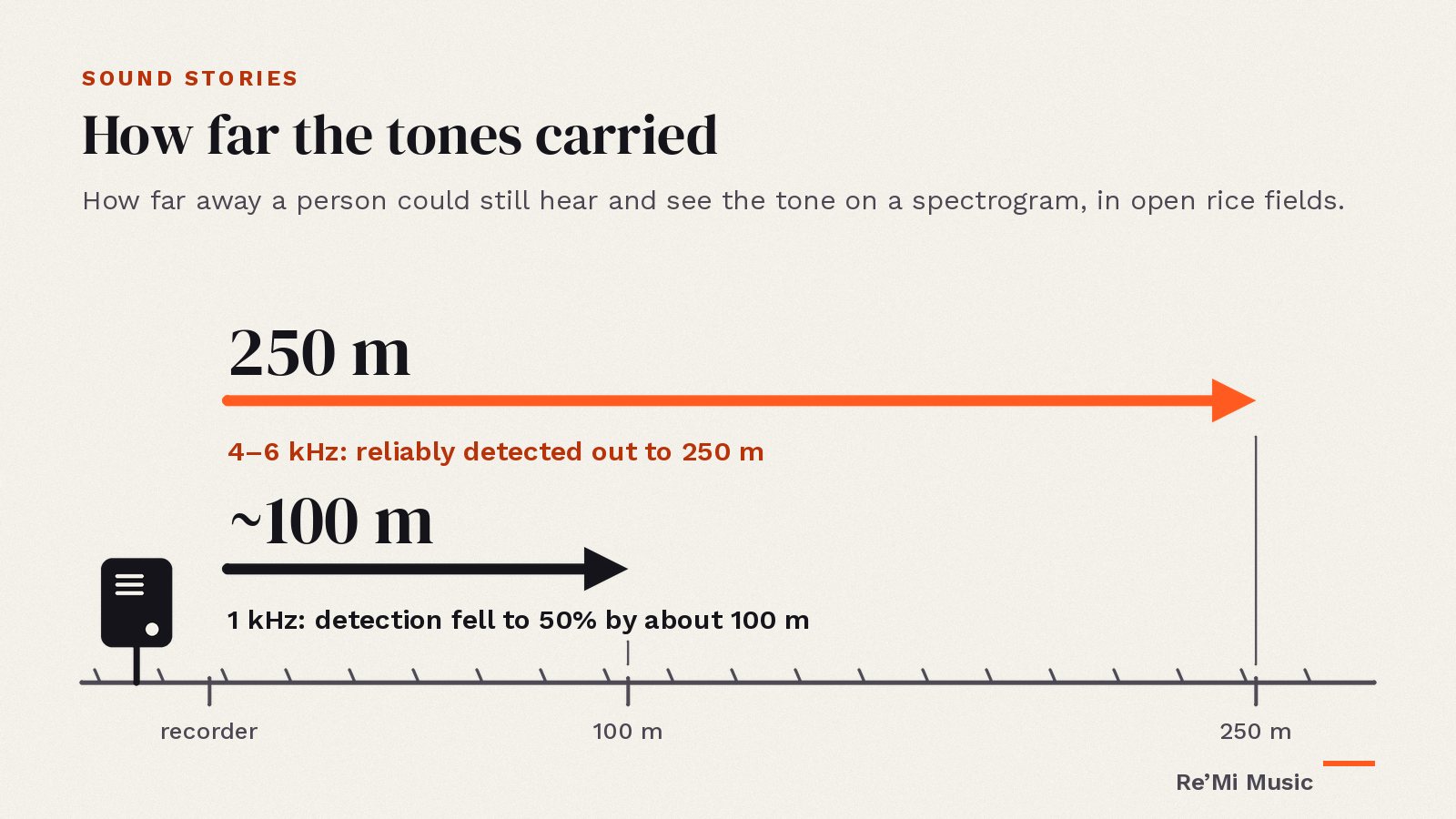
The results are lovely and practical. Detection dropped steeply with distance, but not evenly. The low 1 kHz tone was the hardest to catch and faded fastest. Tones of 4 to 6 kHz stayed above 50% detection out to 250 metres, and 6 kHz was picked up at 300 metres. At 8 kHz it dropped off again, mostly because higher sounds lose more energy over distance. Humid air actually helped, while temperature, wind and time of day made no real difference.
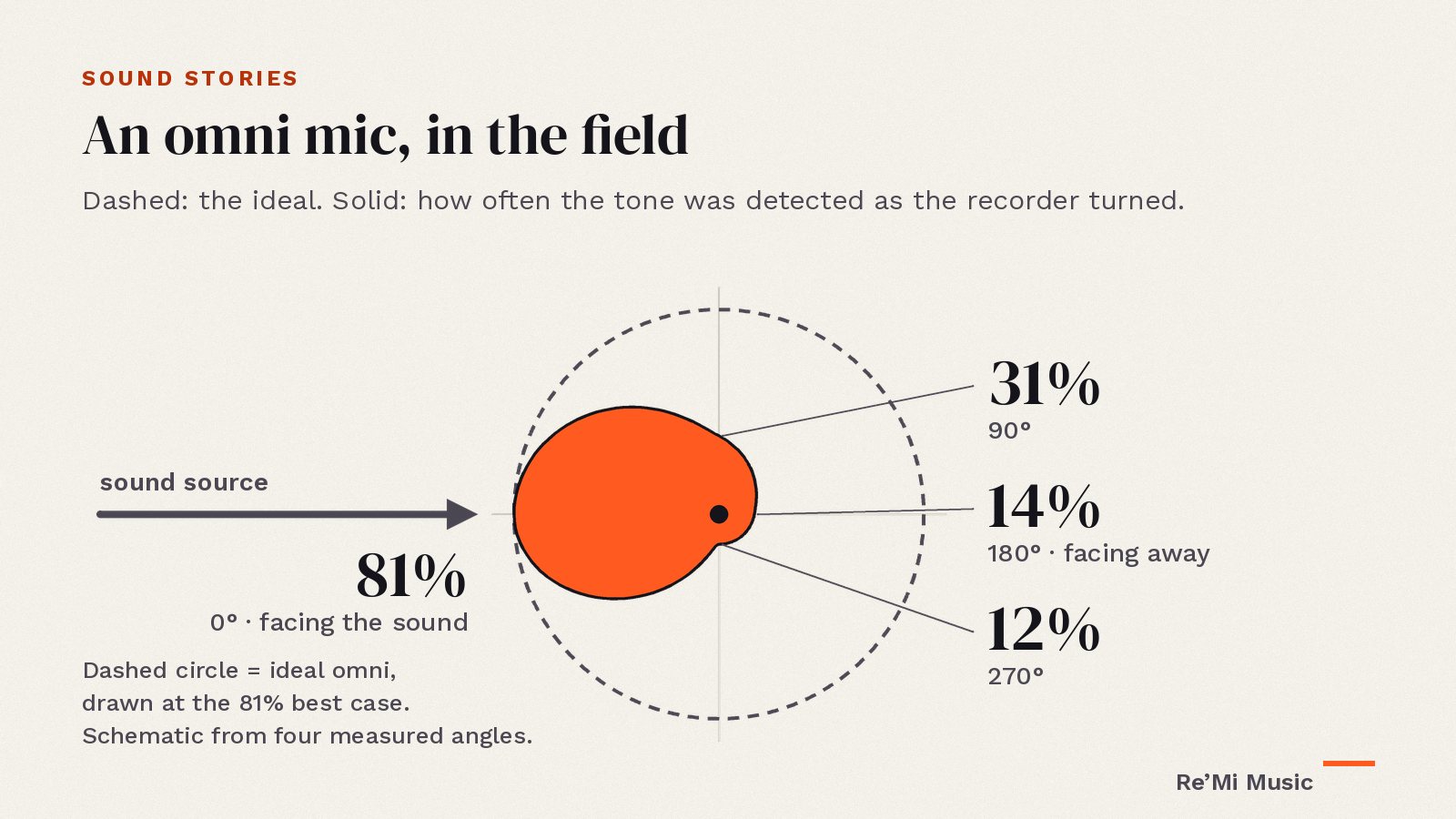
The biggest factor of all was simply which way the recorder was facing. Pointed straight at the source, it had an 81% chance of picking the tone up.
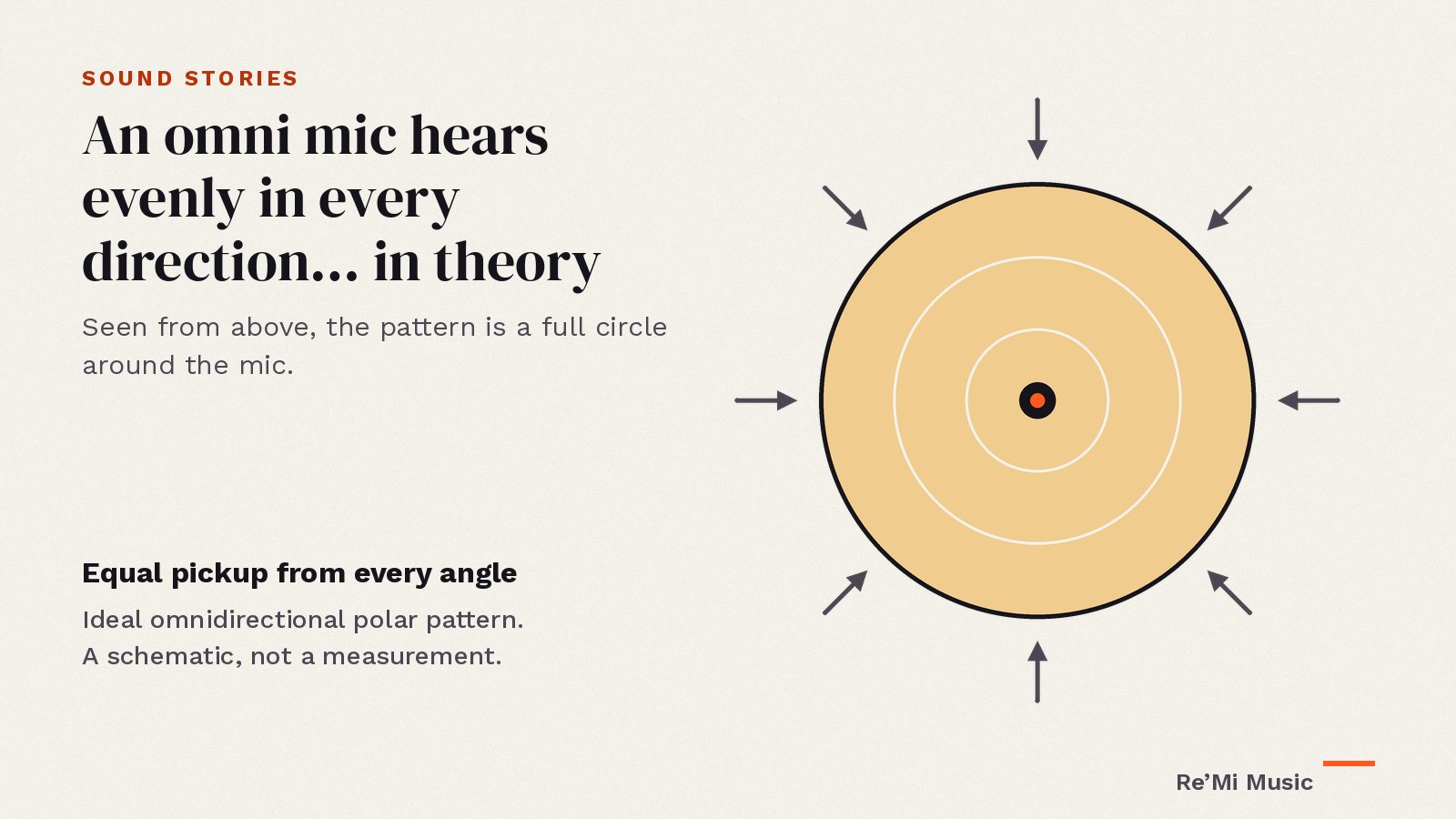
What surprised me most is that these recorders use an omni mic, which in theory hears evenly in every direction. Out in the field, the recorder's own body cast an acoustic shadow. Facing away from the sound, it caught only 14% of the tones. As the researchers put it, omni is a theoretical maximum, not a field reality.
The team is honest about the limits: they used pure tones rather than real animal calls, and a person judged detection, by listening and checking a spectrogram, rather than automatic software. The percentages here are averages across the tests, so think of them as a guide, not a promise for every field. As Dr Seshadri KS from ATREE put it, "nothing can replace the good old technique of being in the field and listening to what the environment is telling us."
I love that. We've had microphones for a long time, and we're still learning how they hear the world. That's a very good question to keep asking.
Sources
- Research Matters, "Sounds in the wild: How far can a bioacoustic recorder really hear?" (2 Nov 2026), https://researchmatters.in/news/sounds-in-the-wild-how-far-can-a-bioacoustic-recorder-really-hear
- "Sound advice: A calibration framework for defining detection space in passive acoustic monitoring", PLOS One, https://journals.plos.org/plosone/article?id=10.1371%2Fjournal.pone.0350789
Takeaway: How far a recorder can hear depends on pitch and air, but most of all on which way it's pointing.